
India's fencing campaign at the Asian Games concluded without a medal after C A Bhavani Devi and Shreya Gupta were eliminated in the women's individual sabre event. Bhavani Devi reached the round of 16 before losing to China's Rao Xueyi, while Shreya Gupta also exited in the pre-quarterfinals against South Korea's Jeon Ha-young. Earlier, Mina Devi Naorem and Ashitha Stalinraj Joys were eliminated in the women's foil event.
India's fencing campaign at the Asian Games concluded after the women's sabre team was defeated by Uzbekistan in the quarterfinals. Despite an earlier win against Indonesia, the Indian team, including C A Bhavani Devi, Shreya Gupta, and Jefarlin Simla, could not advance further, marking an underwhelming performance where no fencer reached the medal rounds.
A 20-member Indian fencing squad, led by Olympian C A Bhavani Devi, has departed for Japan to participate in the Asian Games.
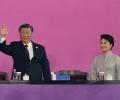
The Fencing Association of India (FAI) has announced significant cash awards for its medallists at the upcoming Asian Games in Japan, aiming to motivate fencers to achieve glory for the nation. Gold medallists will receive Rs 10 lakh, silver medallists Rs 7.5 lakh, and bronze medallists Rs 5 lakh.

India's men's foil and women's epee fencing teams were both eliminated in the round of 16 at the Asian Games. The men's team lost to Hong Kong, while the women's team was defeated by Uzbekistan, marking a double setback for the nation in the fencing events.

India's fencing contingent achieved remarkable success at the U-23 Commonwealth Fencing Championship in Lagos, Nigeria, securing a total of 17 medals, including four gold, four silver, and nine bronze. Indian fencers dominated both men's and women's individual events across Sabre, Foil, and Epee categories.

'Fencing work for 4.35 km of the border could not be carried out due to objections by the Border Guard Bangladesh.'

Despite not winning a medal at the recently-concluded Asian Senior Fencing Championships, India's men's foil team secured direct qualification for the upcoming Asian Games, marking a significant step forward for the sport in the country. The event, hosted in India for the first time, provided valuable experience and highlighted the growing competitiveness of Indian fencers against top Asian nations.
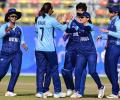
Indian fencers Hemash Sanasam and Sachin have successfully advanced to the round of 32 in the men's foil individual event at the Asian Games, despite a mixed performance in their respective pools. They will now face Kazakh opponents in the next stage.
India's top fencer, Bhavani Devi, has issued an unconditional apology and appealed the two-month suspension she received after being shown a Black Card at the Asian Fencing Championships. The Fencing Association of India is supporting her appeal to the FIE, citing her clean disciplinary record and the upcoming World Championships.
India is set to host the Asian Senior Fencing Championships for the first time from June 19-24 in New Delhi, featuring athletes from 34 countries, including Olympic medallists. The event is a direct qualifier for the Asian Games and offers ranking points for the 2028 Los Angeles Olympics, with Indian Olympian Bhavani Devi leading the home challenge.

Pakistan has decided not to send its team to the Asian Senior Fencing Championships in New Delhi, despite an invitation from local organisers. India is hosting the event for the first time, which will also include the General Assembly of the Fencing Confederation of Asia. Several other nations, including Hong Kong and Australia, are also facing visa-related challenges for their delegations.
India is set to host the 26th Asian Fencing Championships, which will also serve as a qualifier for the Asian Games. The Sports Ministry has sanctioned Rs 6 crore for the event, taking place at the Bharat Mandapam complex, featuring over 400 athletes from 30+ countries.

Indian athletes are set to compete across various disciplines including athletics, badminton, boxing, hockey, kabaddi, shooting, squash, swimming, and table tennis at the Asian Games on Friday, September 25. Key events include finals in athletics and shooting, along with crucial knockout stages in team sports and individual events.
Japan's Masaru Yamada and Sano Yui clinched gold medals in men's epee and women's sabre respectively at the Senior Asian Fencing Championships. Hosts India, including Olympian C. A. Bhavani Devi, had a disappointing outing with fencers finishing in lower ranks across both events.

The West Bengal government has transferred approximately 32 acres of land to the Border Security Force (BSF) for fencing along the India-Bangladesh border, a process that had been pending for several years. The state cabinet also approved proposals for additional land transfers for permanent border outposts and further fencing work in various districts.
South Korea and Japan secured gold medals in the men's sabre and women's foil team events, respectively, at the Asian Senior Fencing Championships. Indian teams, despite facing strong competition, demonstrated grit and finished 10th overall, showing promising developmental strides for the future of Indian fencing.

Mohammed Shami's impressive 4/30 led Bengal's strong start against Delhi in the Ranji Trophy. Other matches saw centuries from Shikhar Mohan (Jharkhand), Ankit Bawne (Maharashtra), and Gaurav Choudhary (Odisha) on the opening day of Group C fixtures.

India's Prachi Lohan and Sachin achieved top-25 finishes at the Asian Senior Fencing Championships in New Delhi. Japan's Kyosuke Matsuyama won gold in men's foil, while Kazakhstan's Irina Bakaldina secured gold in women's epee, marking a historic first for her country.

Top Indian athletes like PV Sindhu, Mirabai Chanu, Neeru Dhanda, and Harmanpreet Singh have been nominated by their respective National Sports Federations to the electoral college for the Indian Olympic Association's Athletes Commission polls on November 3. The article details the nomination process, eligibility criteria, and the composition of the new Athletes Commission, noting the absence of some federations and the exclusion of outgoing members like Mary Kom.

Indian educational institutions are adopting physical modifications like "anti-suicide" fans and barriers to prevent student suicides, drawing parallels with measures taken by foreign universities such as Houston, Cornell, Harvard, and NYU. While these measures are seen as "bandaid solutions" by some, experts suggest restricting access to lethal means is a valid part of a comprehensive suicide prevention strategy, alongside crucial mental health support.

Punjab Police dismantled two illegal arms and narcotics supply networks in Amritsar, arresting four individuals and recovering an M16 rifle, nine pistols, and 15 kg of opium. The accused are allegedly linked to foreign-based smugglers, with further investigation underway to uncover complete linkages.
Kolkata's iconic Salt Lake Stadium is undergoing extensive renovations to prepare for upcoming international football matches featuring five-time world champions Brazil and two-time world champions Uruguay against India. The upgrades include fresh paint, renovated seating, improved spectator facilities, re-turfing of pitches, and enhanced security measures.
India's men's sabre and women's foil teams were eliminated from the Asian Games after losing their respective quarterfinal matches to Korea and Japan. The men's team had defeated the Philippines in the pre-quarterfinals, while the women's team advanced past Indonesia in the round of 16 before their quarterfinal exits.

India summoned Pakistan's Charge d'affaires to protest continued cross-border infiltration and alleged facilitation of drug smuggling, rejecting Pakistan's earlier protest regarding BSF action against suspected intruders. India stated BSF engaged infiltrators who posed a security threat after ignoring warnings.

Economic think tank GTRI has urged the Indian government to withdraw the proposed UPI charges, set to begin on October 15, arguing that the digital payment system should remain free for merchants and consumers. GTRI warns that these charges could lead to higher prices, reduced earnings for small businesses, and weakened household demand, while also benefiting international card networks by eroding UPI's price advantage. The think tank also called for an independent audit of UPI's running costs.

An Assam Rifles jawan was killed and four others were injured in a suspected militant attack along the India-Myanmar border in Arunachal Pradesh's Changlang district. The incident occurred during a patrol, with preliminary reports suggesting NSCN (K-YA) involvement. Security operations have been intensified in the sensitive border region.

This article provides a comprehensive schedule for Indian athletes competing at the Asian Games on September 26, 2023. It details events across various sports including athletics, badminton, kabaddi, boxing, hockey, and more, with specific timings in IST.

Mukesh Choudhary's impressive 5/78 helped Rest of India restrict Jammu and Kashmir to 278 on day two of the Irani Cup. Despite a strong fightback from J&K's Paras Dogra, Abdul Samad, and Lone Nasir Muzaffar, RoI ended the day 17 runs in arrears in their second innings, having lost an early wicket. The match has been dominated by fast bowlers, with RoI looking to build a lead on day three.

India experienced a day of mixed results at the Asian Games, securing a gold medal in shooting through Suruchi Singh and Kamaljeet, and a silver in men's 10,000m with Gulveer Singh. However, a major setback occurred with the unexpected early exit of top badminton men's doubles pair Satwiksairaj Rankireddy and Chirag Shetty. The nation also added several bronze medals in pole vault, shot put, table tennis, and assured more in squash, pushing its total medal count to 23.

A comprehensive schedule detailing the events and timings for Indian athletes participating in various sports at the Asian Games, including badminton, boxing, canoeing, equestrian, fencing, hockey, kabaddi, rowing, soft tennis, sepaktakraw, shooting, squash, swimming, table tennis, weightlifting, and wushu.
A comprehensive schedule outlines the participation of Indian athletes across various disciplines at the Asian Games on September 23, including key events in badminton, boxing, shooting, hockey, and weightlifting, with several athletes vying for qualification and medal rounds.

Indian athletes are set for a busy day at the Asian Games on September 27, competing across a wide array of sports including athletics, archery, shooting, boxing, and squash.

West Bengal's new government, led by Chief Minister Suvendu Adhikari, has approved several key policy changes, including the implementation of the Ayushman Bharat health scheme, land transfer for border fencing, and the adoption of new criminal laws.

India experienced a mixed day at the Asian Games, with skeet shooters and rowers adding to the medal tally, and wushu player Roshibina Devi securing a silver. While kabaddi and hockey teams continued their winning streaks, boxing, gymnastics, and fencing saw disappointments. The overall medal count reached 15, with only one gold so far.

New Delhi is gearing up to host the 18th BRICS Summit at Bharat Mandapam on September 12-13, with extensive preparations underway across key venues, roads, hotels and security zones.

The Supreme Court has refused to grant an interim stay on the imposition of Merchant Discount Rate (MDR) on UPI person-to-merchant transactions exceeding Rs 2,000, which is set to take effect from October 15. The court has agreed to examine the challenge to this new fee and has issued notices to the Centre, RBI, and NPCI, seeking their responses within four weeks. A Public Interest Litigation (PIL) argues that the levy lacks statutory safeguards, transparency, and public consultation, and could adversely affect merchants and consumers.

Opposition MPs have voiced strong concerns regarding the government's decision to levy a 0.4 per cent fee on UPI payments above Rs 2,000 made to merchants, effective October 15. They argue that this "anti-people" move will negatively impact a large segment of the population, despite the finance ministry clarifying that the charge is on the merchant ecosystem and not directly on customers for P2P or small payments.

Former NITI Aayog vice-chairman Rajiv Kumar has urged the government to maintain zero-fee UPI transactions for several more years, arguing that the benefits of UPI as a public good outweigh the costs. This comes amidst the government's recent decision to introduce a 0.4% fee on person-to-merchant UPI transactions above Rs 2,000 from October 15, a move that has drawn criticism.

India's Asian Games campaign looked bleak in Nagoya. A slow medal start saw the country slip to around 12th, before a late surge took India back to fourth with 85 medals.
